How to Choose a Safe and Attractive Fence for Your Dog
Find the right fence height, material, spacing, and gate design to give your dog a secure yard without taking away from your Bayside home’s appearance.
A fenced yard can give a dog room to play, explore, and enjoy the outdoors while giving the owner greater peace of mind. However, not every fence is suitable for every dog. A design that safely contains a small, quiet pet may not work for a large dog that can jump, climb, or dig.
For homeowners in Bayside, the goal is often to create a secure enclosure that also complements the house and landscaping. The right solution depends on the dog’s size and behavior, the shape of the yard, the desired level of privacy, and how much maintenance the homeowner wants to handle.
Consider Your Dog’s Size and Behavior
Height is usually the first consideration, but it should not be the only one. Some large dogs are content behind a moderately sized fence, while smaller athletic dogs may be able to climb or jump surprisingly high.
Think about how your dog behaves outdoors:
- Does the dog jump when people or animals pass by?
- Is it able to climb chain link or horizontal rails?
- Does it dig near boundaries?
- Can it squeeze through narrow openings?
- Does seeing activity outside the yard cause excitement or barking?
- Is the dog likely to push against a gate or weak section?
Answering these questions helps determine the height, spacing, visibility, and strength the fence needs.
Decide Whether Your Dog Needs Visual Privacy
Some dogs remain calmer when they cannot see pedestrians, wildlife, neighboring pets, or vehicles outside the yard. For these dogs, a solid wood or vinyl privacy fence may reduce visual triggers and create a quieter outdoor environment.
Other dogs do well with an open fence that allows them to see through the boundary. Aluminum and chain link can provide secure containment without closing off the yard or hiding landscaping.
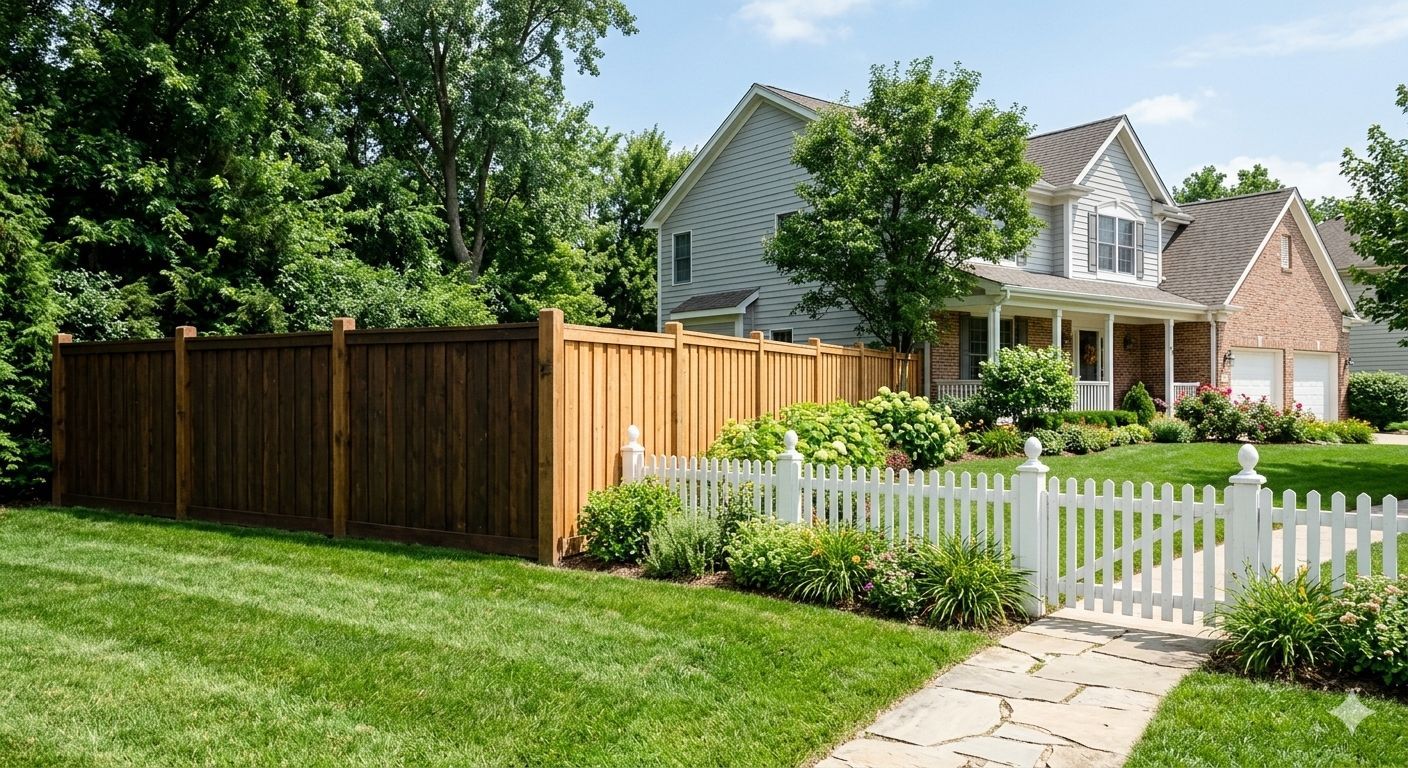
The property itself also matters. A solid fence may be useful along a sidewalk or neighboring yard, while an open style may be preferred along a wooded or landscaped portion of the property. Combining fence styles can provide targeted privacy without enclosing every view.
Compare Pet Friendly Fence Materials
Each material offers different benefits for pet containment, appearance, upkeep, and cost.
Vinyl Fencing
Vinyl privacy fencing provides a smooth, solid surface that is difficult for most dogs to climb. It blocks outside views and requires relatively little maintenance. Because there are no gaps between full privacy panels, it can also work well for smaller dogs.
Proper installation is important. Panels, rails, and posts need to remain secure when exposed to wind, changing temperatures, and pressure from an active pet.
Wood Fencing
Wood offers privacy and a natural appearance that works well with many homes and landscapes. Board spacing and height can be customized for the dog and the yard. Solid vertical boards are generally harder to climb than designs with exposed horizontal supports on the dog’s side.
Wood needs periodic maintenance, and loose or damaged boards should be repaired promptly. Small openings created by rot or shifting materials can eventually become escape points.
Aluminum Fencing
Aluminum fencing provides an attractive, open boundary and requires limited upkeep. When used for dogs, picket spacing should be narrow enough to prevent the animal from squeezing through. The distance between the bottom rail and the ground also needs careful attention.
This material is best suited to dogs that do not react strongly to activity outside the yard and are not likely to dig beneath the fence.
Chain Link Fencing
Chain link is a durable and practical option for enclosing dog areas and larger yards. It offers clear visibility and can be installed in different heights. Vinyl coated chain link may blend into the landscape more naturally than traditional galvanized fencing.
Because some dogs can climb chain link, owners should consider the pet’s behavior before choosing it. Privacy slats can reduce visibility, although they do not create the same complete visual barrier as a solid fence.
Prevent Gaps Along the Ground
Changes in grade can create openings beneath a fence. Even a small gap may be enough for a little dog to escape, while a determined larger dog may enlarge a soft area by digging.
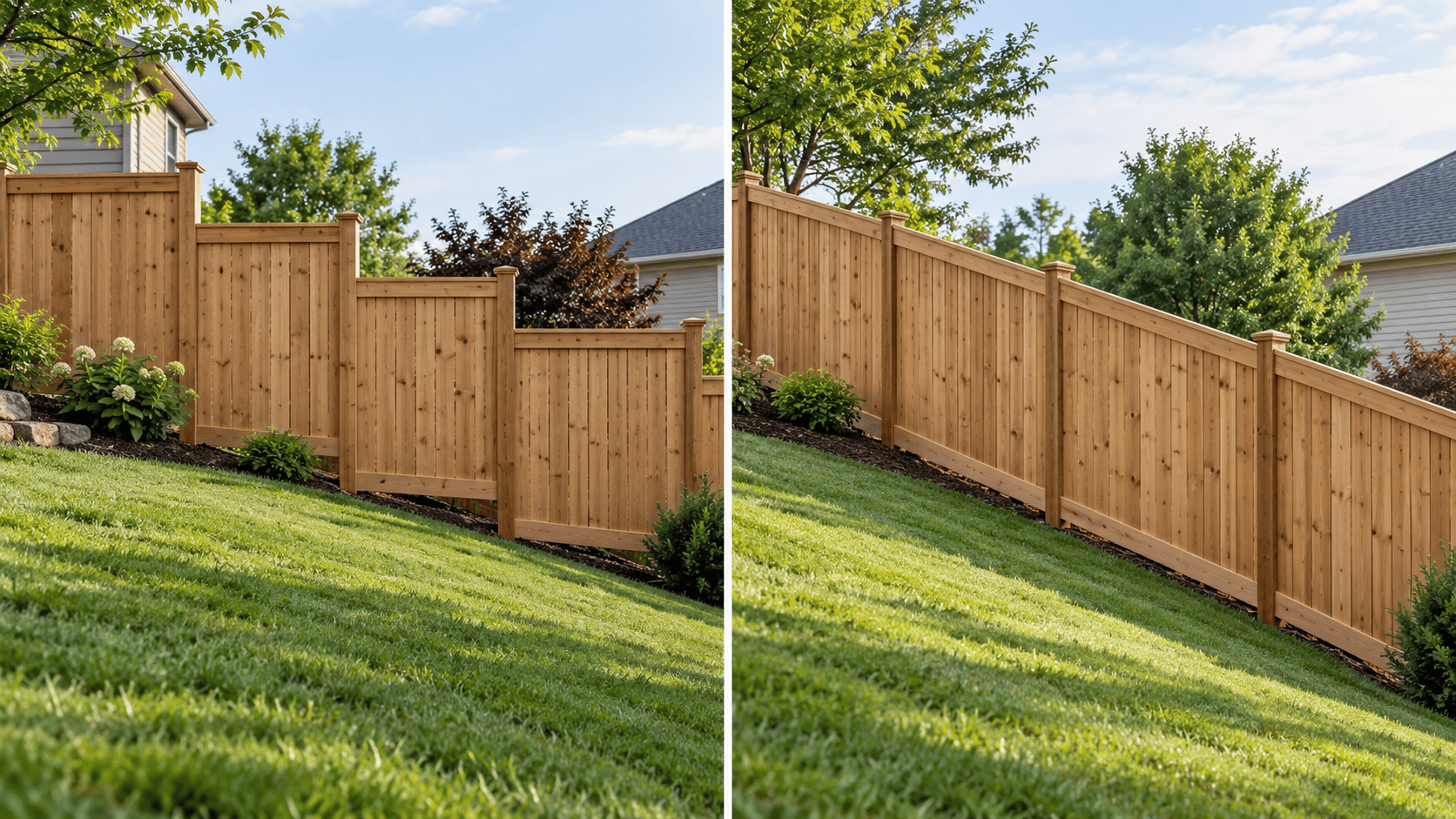
The installation method should follow the terrain closely and minimize spaces under panels or pickets. Sloped yards may require racked panels, stepped sections, or custom adjustments depending on the material.
Drainage must also be considered. Closing every opening without accounting for water flow can create pooling or erosion. A professional installer can help balance pet security with the natural conditions of the yard.
Make Gates the Strongest Part of the Enclosure
Gates are frequent escape points because they move, settle, and receive repeated use. A secure dog fence needs dependable gate posts, hinges, and latches.
The latch should close reliably and be positioned where the dog cannot easily bump, push, or manipulate it. Self closing or self latching hardware may provide an additional layer of security in busy households.
Check the clearance beneath the gate and along both sides. The opening needs to be small enough to contain the pet while still allowing the gate to swing freely through seasonal ground changes.
Families should also establish a habit of checking that the gate is closed before letting the dog outside. Even the best hardware cannot help if a gate is accidentally left open.
Plan Access for People and Equipment
A dog enclosure still needs to work for lawn care, landscaping, outdoor projects, and everyday foot traffic. A walk gate near the house may be convenient for daily use, while a wider gate may be needed for a lawn tractor or other equipment.
Consider whether delivery workers, utility crews, or guests regularly enter the yard. Clear access and logical gate placement can reduce confusion and lower the chance that someone accidentally leaves the enclosure unsecured.
If the property needs multiple gates, all of them should use reliable hardware and be included in routine fence inspections.
Inspect the Fence Regularly
Wisconsin weather can affect posts, panels, gates, and ground clearance. Snow, wind, moisture, and freeze and thaw cycles may cause materials or soil to shift over time.
Walk the fence line periodically and check for:
- Loose or leaning posts
- Broken, cracked, or rotting boards
- Bent pickets or damaged mesh
- Gaps developing near the ground
- Gates that drag or fail to latch
- Loose hinges and fasteners
- Signs that the dog has been digging or chewing
Small problems are usually easier to correct when they are found early.
Create a Fence That Works for the Whole Property
A pet fence should provide dependable containment without looking like an afterthought. Material, color, height, and layout can be selected to work with the home’s architecture and surrounding landscape.
Bayside Fence helps homeowners plan and install fences designed around their pets, properties, and daily routines. Whether you need a private backyard, an open enclosure, or a combination of styles, careful planning can create a safer outdoor space that still looks at home in the neighborhood.
Contact Bayside Fence to discuss your fence installation project in Bayside, WI, and request an estimate.